A regional health authority adapts a global patient-care model to address local community disparities. A ministry of education collaborates with private technology partners to modernize workforce training. A global NGO restructures its cross-border operations to align with emerging international labor standards.
Each initiative requires a leader who understands unfamiliar systems and knows how to execute a strategic plan within them.
These leaders come from diverse professional backgrounds. Some start as classroom teachers or nurses. Others begin as engineers, military officers, or program managers. Despite these varied entry points, employers consistently seek the same underlying capabilities. The World Economic Forum’s Future of Jobs Report 2025 reveals that 61 percent of employers identify leadership and social influence as core workforce requirements, ranking it third behind analytical thinking and resilience.
International leadership roles exist across fields such as education, government, healthcare, technology, nonprofits, and the private sector. Entry paths vary, but core leadership skills apply across borders and sectors. This article examines the daily responsibilities, job titles, industries, and academic preparation that drive global leadership careers.
Expand Your Global Perspective With NYU Steinhardt
Turn Real-World Challenges Into Actionable Solutions
What Does an International Leadership Career Look Like?
Global leadership means directing people, programs, and resources across national and cultural boundaries. Job titles differ among employers, but daily execution follows clear patterns.
- Building institutional partnerships: Connecting organizations across national borders.
- Managing distributed teams: Leading cross-cultural staff across multiple time zones and languages.
- Designing multi-region programs: Operating within several distinct regulatory environments at once.
- Influencing public policy: Shaping guidance at the national, regional, or agency level.
- Driving organizational transformation: Restructuring operations to expand systemic reach.
- Solving cross-border problems: Addressing complex challenges that span multiple sectors and countries.
Scope defines this work more than the specific industry. A school superintendent negotiating a bi-national district exchange faces different daily pressures than a technology manager coordinating engineering teams across three continents. Yet both roles demand the same underlying capability: leading people and aligning systems across border lines.
Common Roles in International Leadership
Global leadership positions combine partnership negotiation, cross-cultural team management, and policy implementation. Examples may include:
- International program director: Leads and develops strategy, budgetary decisions, and operational outcomes for initiatives across multiple countries.
- Global partnerships manager: Negotiates and maintains formal agreements with universities, government ministries, funders, and NGOs.
- Director of international strategy: Determines expansion plans, evaluating which global markets or regions an organization enters and how.
- Policy advisor: Translates academic research into actionable policy guidance for ministries, government agencies, and multilateral bodies.
- NGO program director: Directs field operations, manages on-the-ground staff, and delivers performance reporting to international funders.
- Global learning and development manager: Designs, implements, and scales professional training across a distributed, cross-border workforce.
- International affairs specialist: Coordinates institutional relationships between an organization and foreign governments or international agencies.
- Organizational development consultant: Advises leadership teams on structural design, workplace culture, and change management across borders.
Industries Where Global Leaders Make an Impact
Systems thinking and intercultural fluency matter more to these employers than industry-specific tenure. Leaders with these capabilities frequently move between fields, adapting methods from one sector to solve challenges in another. Global leaders frequently excel in:
- Education: Careers span university partnership offices, study abroad administration, international student success, education policy, and educational NGOs. Leaders in multi-continental school networks reconcile competing national curricula while maintaining consistent instructional standards.
- Government and public policy: Foreign service agencies, workforce development boards, education ministries, and international organizations recruit leaders who can implement policy within unfamiliar bureaucratic contexts. Public sector employers increasingly prioritize these core competencies.
- Healthcare and global health: Administrators direct international health systems, humanitarian health initiatives, and public health partnerships. The work requires simultaneously aligning clinical standards, complex funding rules, and local medical practices.
- Nonprofits and international development: Humanitarian organizations, refugee support agencies, philanthropies, and community groups hire directors who can manage donor expectations while delivering measurable outcomes across national contexts.
- Technology and innovation: EdTech firms, AI labs, and global product teams recruit leaders to drive digital transformation and organizational innovation. Distributed teams rely on leaders who coordinate complex workflows across different time zones and languages.
- Military and defense: Coalition initiatives, international partnerships, leadership development programs, and organizational strategy units apply these same cross-border management skills under strict operational constraints.
Skills That Open Doors Across Borders
Employers hire for capability more than for pedigree. The OECD documents a broad shift toward skills-first hiring and reports that recruiters most often search for candidates using skills criteria. The skills that move well across borders include:
- Strategic leadership: Setting direction when information is incomplete
- Systems thinking: Seeing how funding, culture, and regulation interact
- Intercultural communication: Adjusting how you persuade, not what you stand for
- Innovation: Testing new approaches instead of importing a template
- Collaboration: Sharing credit and authority with partners you do not manage
- Organizational change: Moving an institution from one operating model to another
- Evidence-based decision making: Choosing based on data you have examined yourself
- Policy analysis: Reading legislation and regulation for practical consequences
The World Economic Forum projects that 39 percent of workers’ core skills will change by 2030. Leaders who keep learning and acquiring new skills will be the ones most likely to thrive in this fast-paced employment environment.
Finding International Career Opportunities
Start with organizations that already work across borders. Universities, NGOs, international organizations, government agencies, consulting firms, and multinational corporations all post global roles, but many jobs in international education and development get filled through networks before a listing appears. Four practical steps:
- Join professional associations in your field and volunteer for their international committees.
- Track the career pages of multilateral organizations and large NGOs directly rather than waiting for aggregators.
- Use alumni communities. A doctoral cohort often produces the introduction that a job board cannot.
- Look for cross-border assignments inside your current employer before you look outside.
Remote education careers and hybrid global leadership roles continue to expand as organizations collaborate across borders, which widens the field for candidates who cannot relocate.
How Doctoral Study Can Prepare Leaders for Global Careers
A doctorate in global leadership prepares graduates to direct complex organizations. Academic training builds the rigorous analytical habits the work demands. Courses covering research methods and organizational theory equip professionals to investigate systemic issues, while cross-sector policy analysis trains leaders to defend strategic recommendations against opposition.
The credential continues to gain traction among senior executives. The share of doctorate holders in the OECD working-age population grew from 0.9 percent in 2014 to 1.3 percent in 2022, an increase of 41 percent.
Applied doctoral programs require students to conduct research inside their own workplaces, producing immediate organizational impact alongside the degree. NYU Steinhardt replaces the traditional dissertation with a Problem of Practice, an academically informed solution to a persistent organizational problem that students develop throughout the program.
Find a Doctorate Program that Will Help Build Global Leadership Skills
When evaluating an international doctorate, focus on three core questions:
- Organizational scope: Does the curriculum address entire organizations rather than isolated job functions?
- Flexibility: Can you maintain your career while you study?
- Peer diversity: Will your classmates teach you perspectives your own industry cannot?
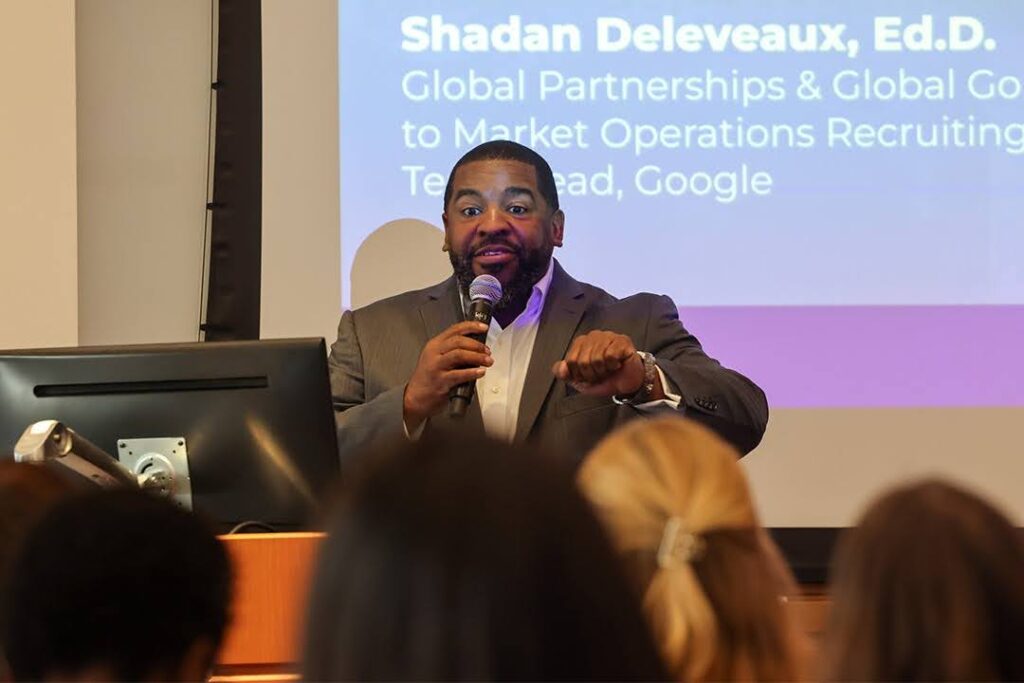
That last point is critical. Global leadership thrives when you learn alongside peers from diverse sectors and regions. NYU Steinhardt EdD in Leadership and Innovation builds each cohort from leaders in for-profit companies, healthcare, higher education, nonprofits, government, and Pre-K–12 schools. Past cohorts include leaders from IBM, Google, CVS Health, the World Bank, the NYC Department of Education, and The Millennium School in Dubai.
The 42-credit curriculum spans 17 courses and takes as few as 24 continuous months, starting with an immersive three-day residency at a global NYU site. Whether your goal is to transform a single community or influence systems across multiple countries, the program equips you with an international lens and an innovative mindset.
Where Global Impact Begins
Global careers take many shapes, but they all require leaders who can navigate complexity, cross cultural divides, and drive organizational change.
If you are ready to lead at that level, explore the EdD in Leadership and Innovation at NYU Steinhardt, where your cohort becomes an essential part of what you learn. Review the admission requirements and start your application today.